Vince Lombardi: A Fourth Degree Knight Whose Faith Shaped a Championship Legacy
- Sun, Oct 18, 2026 3:19 PM
Vince Lombardi: A Fourth Degree Knight Whose Faith Shaped a Championship Legacy
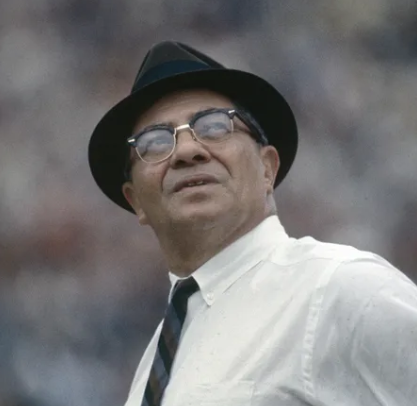
GREEN BAY, Wis. — Decades after his death, Vince Lombardi remains one of the most celebrated coaches in NFL history. What is less widely known is that the man who led the Green Bay Packers to five NFL championships, including the first two Super Bowls, and whose name is on the Super Bowl trophy, was also a devoted Fourth Degree Knight of Columbus whose Catholic faith was the foundation of his life and leadership.
According to the Knights of Columbus, Lombardi joined Msgr. Basche Council 4505 in Green Bay, Wisconsin, and later became a Fourth Degree Knight. In an excerpt published by the Order from The Knights of Columbus: An Illustrated History, Lombardi is described as “a man with strong Catholic faith and an unparalleled coaching career.” He believed faith was important in every life, considered daily Mass and Communion the source of his strength, and often led his Catholic players to Mass.
Born Vincent Thomas Lombardi on June 11, 1913, in Brooklyn, New York, to Italian immigrant parents, Lombardi grew up in a devout Catholic household. He served as an altar boy and, as a teenager, entered Cathedral Preparatory Seminary with the intention of becoming a priest. Football ultimately drew him away from that path, but his faith remained central. He attended Fordham University, a Jesuit institution, where he played on the famed “Seven Blocks of Granite” line and received a formation that emphasized human dignity, discipline, and the pursuit of the common good.
After coaching stops that included St. Cecilia High School in New Jersey, Fordham, the U.S. Military Academy at West Point, and the New York Giants, Lombardi arrived in Green Bay in 1959 to lead a struggling Packers franchise. Within two years he guided the team to consecutive NFL titles, followed by a third championship and victories in Super Bowls I and II. His overall coaching record stood at 105 wins, 36 losses, and six ties. He died in 1970 at age 57; thousands attended his funeral at St. Patrick’s Cathedral in New York City.
Lombardi’s faith was not confined to Sunday. Biographical accounts and contemporary recollections describe him as a daily communicant who attended Mass at St. Willebrord Catholic Church in Green Bay, a short walk from the Packers’ offices. He is widely remembered for telling his players that the three most important things in life were God, family, and the Green Bay Packers—in that order. His commitment to treating every person with dignity also shaped his approach to race. He refused to tolerate prejudice among his players and made it clear that local businesses that refused service to any of his players because of skin color would be boycotted by the entire team. Players who displayed prejudice risked being dropped from the roster.
In this, Lombardi lived out principles that have long been central to the Knights of Columbus: charity, unity, fraternity, and patriotism grounded in the equal dignity of every person. The Order has highlighted him as one of the notable Knights whose life and work brought distinction to the organization.
Today, councils in New Jersey and Green Bay bear his name, and his example continues to resonate with Knights who seek to live their faith in the public square—whether on a football field, in a workplace, or in service to their communities. Lombardi’s story is a reminder that excellence in one’s vocation and fidelity to one’s Catholic faith are not separate pursuits but two sides of the same calling.