Jim Thorpe, Olympic Champion, NFL Pioneer and Brother Knight
- Thu, Nov 19, 2026 12:00 PM
On November 19, 1887, a Potawatomi mother brought her twin baby boys to be baptized at the Sacred Heart mission in what is now Oklahoma. One of them, James Francis Thorpe, would grow up to be called the greatest athlete in the world. One hundred thirty-nine years later to the day, Michigan Knights remember Jim Thorpe as an Olympic champion, a founding figure of the National Football League, and a Brother Knight.
Thorpe was raised in the Sac and Fox Nation in Indian Territory. His father, Hiram, was Sac and Fox, and his mother, Charlotte Vieux, was Citizen Potawatomi. His Sauk name, Wa-Tho-Huk, means “Bright Path.” According to the Oklahoma Historical Society’s Chronicles of Oklahoma, Charlotte was a Catholic who raised her children in the faith, and the record of the twins’ baptism, with their grandfather Jacob as godfather, was found decades later in the Sacred Heart Church register in Konawa, Oklahoma.
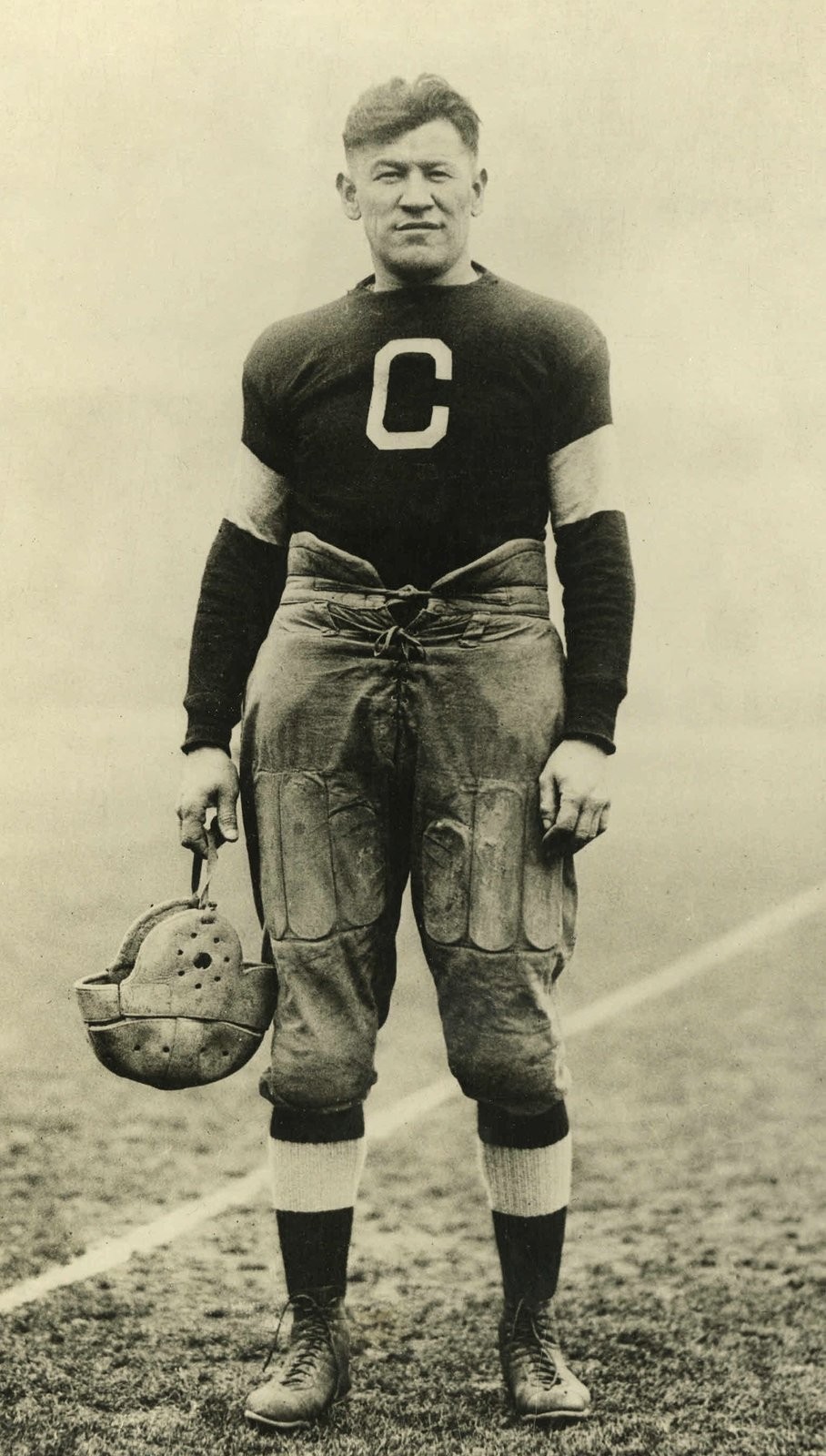
That faith went with him. At the Carlisle Indian Industrial School in Pennsylvania, which he entered in 1904, Thorpe belonged to the school’s Catholic Club while becoming an All-American football player under coach Pop Warner. In 1913 he married Iva Miller at St. Patrick’s Catholic Church in Carlisle.
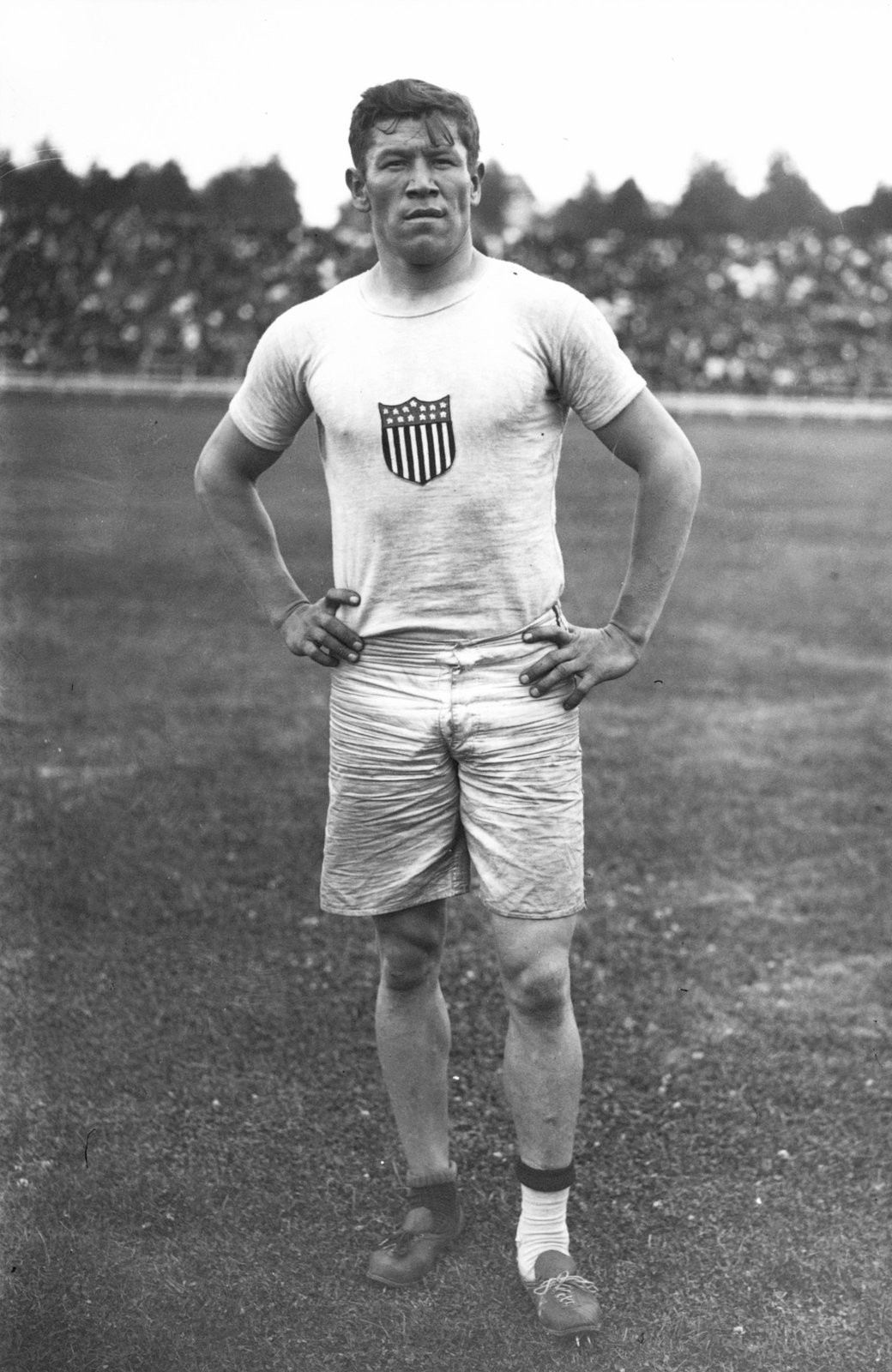
The world learned his name at the 1912 Olympic Games in Stockholm, where Thorpe won both the pentathlon and the decathlon and King Gustav V of Sweden proclaimed him the greatest athlete in the world. Months later his gold medals were taken away because he had been paid to play minor-league baseball for two summers before the Games. Decades after his death, the International Olympic Committee gave duplicate medals to his family in 1982, and in July 2022 it reinstated Thorpe as the sole champion of both events.
Thorpe went on to play six seasons of Major League Baseball, mostly with the New York Giants, but football always remained his favorite sport. In 1915 the Canton Bulldogs signed him, and with Thorpe in the lineup Canton won professional titles in 1916, 1917 and 1919. When a new professional league was organized in 1920, its charter members named Thorpe president. That league, the American Professional Football Association, became the National Football League in 1922. In 1963 Thorpe was enshrined with the very first class of the Pro Football Hall of Fame in Canton.
His Brother Knights had nearly forgotten that he was one of their own. While researching The Knights of Columbus: An Illustrated History (2020), authors Andrew and Maureen Walther rediscovered Thorpe’s membership in the Order. “These men were leading figures and joined the Knights out of their sense of the faith and also because the Knights were a really important element in their country and in their communities,” Andrew Walther told Catholic News Agency.
 |
 |
His life was not without hardship. After his playing days ended, Thorpe struggled to make a living, and he died in Lomita, California, on March 28, 1953. His funeral rites were held at the Catholic church in Shawnee, Oklahoma. In 1950 the Associated Press had named him the greatest athlete of the first half of the twentieth century, and a Pennsylvania town still bears his name.
The Pro Football Hall of Fame remembers him with his own words: “My earning days in athletics are at an end and while sports have been my livelihood, I have really played for the love of competition.” For Knights of Columbus, Jim Thorpe’s bright path is a reminder that a man’s gifts, his heritage and his faith all belong to God, and that the story of a champion begins at the baptismal font.